If you have noticed changes in a loved one’s memory, mood, or safety over the fall and early winter, you are not alone. Family visits, shorter daylight hours, and icy sidewalks can make risks more visible. This guide walks you through practical care pathways in Windsor and Essex County, what each setting offers, typical costs and funding in Ontario, and how in‑home support can help your loved one stay safe and engaged at home.
Early signs that more support may be needed
You do not need a crisis to ask for help. Consider a care review if you see any of the following patterns over weeks, not just single days:
- Missed medications or confusion about doses
- New falls, unsteadiness, or fear of walking outdoors
- Leaving the stove on, doors unlocked, or wandering concerns
- Rapid weight loss, spoiled food, or little interest in meals
- Sleep reversal, sundowning, or increased agitation late day
- Withdrawing from friends or favourite activities
- Caregiver burnout, especially if one person is “on” 24/7
A complimentary in‑home assessment can clarify needs, risks, and options before issues escalate.
Where can someone with dementia live?
There is no single best place for every person with dementia. The right fit depends on safety, health needs, social preferences, and family capacity. Many people thrive at home with layered supports. Others benefit from structured programs or a move to a care setting. Here are the main pathways in Windsor‑Essex.
Living at home with support
For many families, home remains the preferred setting. In‑home care can be tailored from a few hours a week to 24‑hour support.
What it can include:
- Companionship and conversation to reduce isolation
- Dementia‑friendly routines that lower stress and confusion
- Personal care support with bathing, dressing, grooming, and toileting
- Medication reminders and monitoring for side effects
- Meal planning, grocery shopping, and gentle appetite encouragement
- Light housekeeping, laundry, and safe‑home set‑up
- Transportation to appointments, errands, and local activities
- Safety oversight, cueing, and wandering prevention strategies
- Respite care so family caregivers can rest, attend events, or travel
- Nurse care manager oversight to coordinate evolving needs
Private‑pay hourly rates for agency support in our region commonly fall in the low to high 30s per hour, with minimum visit lengths. Public home and community care may provide limited hours based on assessed need. Many families blend public hours with private support for a complete plan.
Where we fit: Amy’s Helping Hands provides personalized care throughout Windsor and Essex County, supervised by nurse care managers. All of our team members receive specialized dementia training in the Gentle Persuasive Approach (GPA), so caregivers are prepared to support responsive behaviours with calm, respectful strategies. Not all home care companies ensure dementia‑specific training for every staff member. Start with a free in‑home assessment at (519) 915‑4370 or care@amyshelpinghands.ca.
Adult day programs and community engagement
Adult day programs offer supervised, structured daytime support and socialization. They can reduce isolation, provide routine, and give family caregivers reliable respite. Transportation may be available and some costs can be subsidized. These programs are particularly helpful for people who enjoy group activities, music, gentle fitness, or crafts.
If you are exploring local options, learn more about adult day programs and how we can help with transportation and care coordination through our resource on adult day care.
Short‑term respite
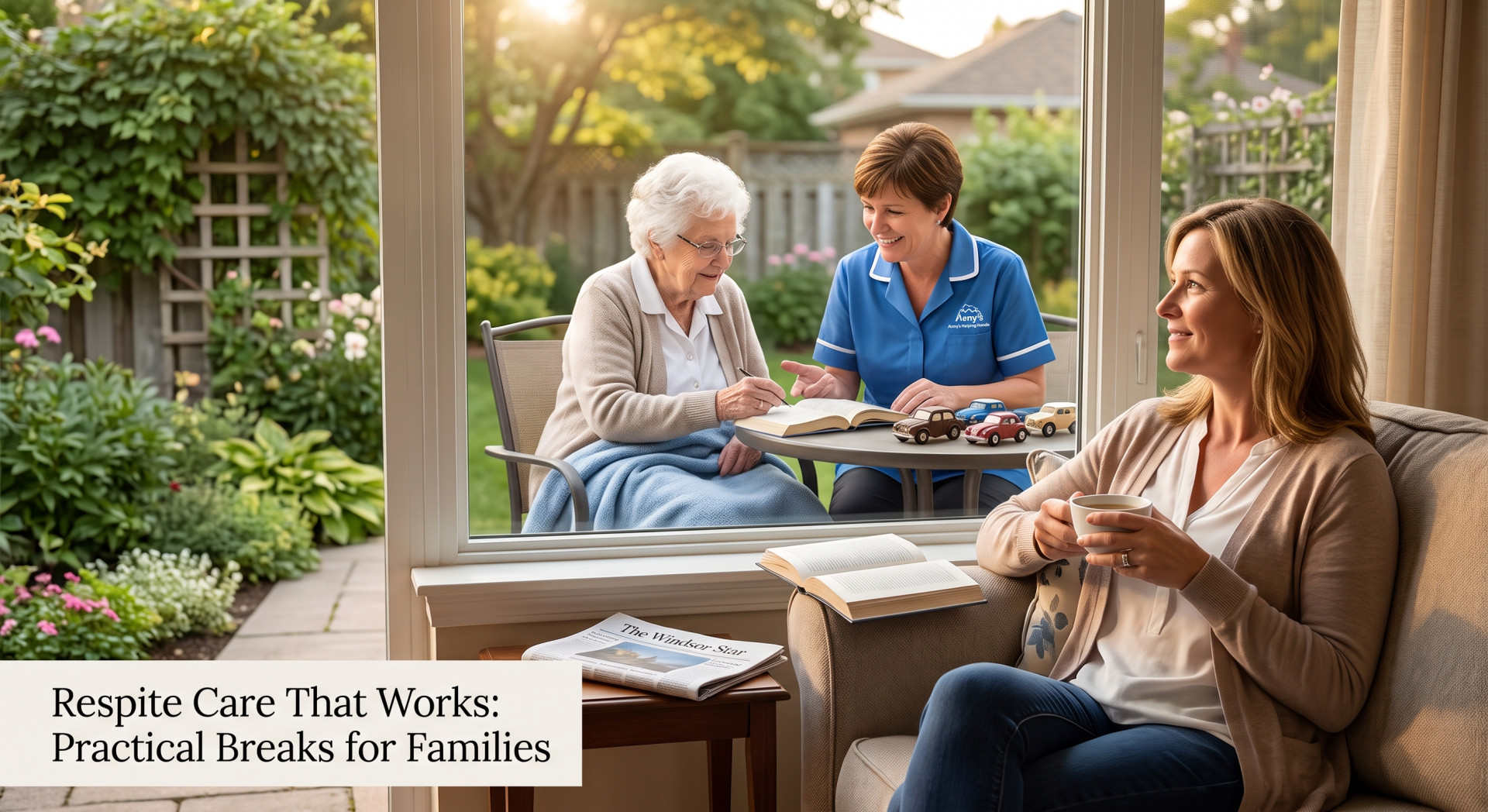
Planned respite keeps families strong. You might schedule a few hours weekly, overnights, or a block of days during holidays or after a caregiver’s surgery. Respite can happen at home through an agency caregiver, within a day program, or at a retirement home that offers short stays. The goal is continuity of care for your loved one and recovery time for you.
Retirement homes and long‑term care
Retirement homes are private, apartment‑style settings with meals, activities, and some personal support. They work well for people who are still mobile, enjoy social contact, and benefit from reminders and light assistance. Fees vary by suite, services, and location.
Long‑term care (nursing homes) are publicly funded, licensed facilities for people who need 24‑hour nursing oversight and extensive personal care. Admission is coordinated through Home and Community Care Support Services. There are co‑payments based on income and room type, and waitlists are common.
In either setting, families sometimes add one‑to‑one caregiver support for safety, engagement, and communication. If you are comparing options or already have a placement and want extra help, see how we supplement retirement care services.
Hospital and transition support
After an illness, fall, or surgery, clear discharge planning prevents readmission. Transitional in‑home care focuses on medication management, mobility and fall prevention, safe bathing, and appointment follow‑through during the first days and weeks home. If you are preparing for discharge in Windsor‑Essex, our team can coordinate hospital to home support with 24/7 start‑up when needed.
Costs and funding considerations in Ontario
- Public home care: Home and Community Care Support Services may provide limited nursing or personal support based on assessed need. Availability and hours vary.
- Private‑pay in‑home care: Agencies set hourly rates and minimums. In our region, families often report rates in the low to high 30s per hour. A deposit may be required to start services, and pricing is finalized after assessment.
- Adult day programs: Fees are modest and may be subsidized; transportation may have an added cost.
- Retirement homes: Private monthly fees depend on suite type and care package.
- Long‑term care: Co‑payment rates are set by the province; subsidies are available based on income.
- Tax credits and benefits: Caregivers may qualify for provincial and federal tax relief. Speak with your accountant and keep detailed invoices.
We can help you understand options and assemble a blended plan that fits your budget and priorities.
What services are available for dementia patients?
Across Windsor‑Essex, services include:
- In‑home companionship and personal care
- Medication reminders and monitoring
- Meal preparation and nutrition support
- Transportation and escorted outings
- Adult day program participation and coordination
- Safety planning, fall prevention, and wandering mitigation
- Respite care for family caregivers
- Hospital discharge and transitional support
- Facility supplemental care in retirement homes and long‑term care
- Palliative and end‑of‑life support with a focus on comfort
At Amy’s Helping Hands, specialized dementia care includes meaningful activities, calm routines, strategies for responsive behaviours, sleep support, and continuous caregiver matching guided by nurse care managers. Every caregiver on our team completes GPA Gentle Persuasive Approach training, reinforcing compassionate techniques that prioritize safety and dignity.
What is the best care for dementia?
The best care is the one that keeps your loved one safe, engaged, and as independent as possible, while protecting family well‑being. For many, that means living at home with layered supports, regular routines, and trusted caregivers. For others, a move to a retirement or long‑term care setting provides needed structure and nursing oversight. The answer changes over time. Reassess regularly, and adapt the plan as needs evolve.
How Amy’s Helping Hands supports you in Windsor‑Essex
You can count on:
- Compassionate companionship and dementia‑friendly activities
- Personal care with dignity, cueing, and steady supervision
- Meal support that encourages hydration and nutrition
- Medication reminders and side effect monitoring
- Transportation to appointments, errands, and community events
- Respite so you can rest and recharge
- 24‑hour and overnight care options
- Nurse care manager oversight with evolving care plans and clear communication
- Transparent daily reporting for peace of mind
- Teamwide GPA Gentle Persuasive Approach dementia training for all staff, ensuring calm, respectful, and safe care in challenging moments
If you need urgent start‑up, our team provides emergency senior care scheduling with 24/7 response.
Practical next steps
- Book a complimentary in‑home assessment to review safety, routine, medications, mobility, and goals.
- Decide on the first layer of support, for example three afternoons a week for personal care and meal prep.
- Add community engagement, such as an adult day program, to build routine and provide respite.
- Revisit the plan every few months or anytime there is a change in health or safety.
Call us at (519) 915‑4370 or email care@amyshelpinghands.ca to get started. We serve Windsor, Tecumseh, Lakeshore, LaSalle, Leamington, Kingsville, Amherstburg, and communities across Essex County.
Summary
Dementia care is not one size fits all. In Windsor‑Essex, you can choose from at‑home care, adult day programs, respite, retirement living, long‑term care, and transitional support. Consider safety risks, daily routines, social needs, and caregiver stamina when deciding where someone should live and what services to add. In‑home support helps many people remain at home longer with dignity. Amy’s Helping Hands provides compassionate, personalized care with nurse oversight, and every staff member trained in the GPA Gentle Persuasive Approach, to keep your loved one safe, engaged, and connected. Reach out for a free in‑home assessment and a plan that fits your family.
Internal resources you might find helpful:
- Learn about specialized care services for dementia
- Explore hospital to home planning
- Compare in‑home options across the region with home care services windsor ontario