Dementia at home: routines, safety, and meaningful daily activities that support dignity
Early spring can throw even the most settled household off balance. Daylight Saving Time shifts the clock, appointments pick up, and outdoor routines change as weather improves. For a person living with dementia, those disruptions can feel magnified. The good news: with a simple, steady plan, you can help each day feel safe, familiar, and meaningful.
This guide shares a practical full-day routine you can adapt at home, plus room-by-room safety tips, calm communication ideas, and ways to prevent wandering. You will also see how Amy’s Helping Hands structures support using the 6 R’s for behaviour response, reminiscence and sensory engagement, and improv-style prompts designed as creative connection. The focus is dignity, comfort, and engagement, not restoring memory.
If you are navigating spring transitions now, consider this a starting point you can personalize. Small, consistent changes add up.
A steady day: a template you can tailor
Aim for the same wake time and bedtime, even after the time change. Consistent cues reduce confusion and help the body adjust.
- Morning (gentle start): Open blinds gradually, greet by name, and offer one simple choice like a preferred shirt. Play a familiar song while assisting with dressing, grooming, and toileting. Use short, reassuring prompts for medication and breakfast. Place a small sign by the table with the word Breakfast to anchor the moment.
- Midday (purposeful activity): Plan one meaningful task aligned with past roles, such as folding towels, watering plants, or sorting recipe cards. Keep lunch at the same hour. Limit TV during meals to reduce distraction.
- Afternoon (fresh air and calm): A brief walk, porch time, or chair stretches can lift mood. Offer a quiet sensory activity afterward, such as hand massage with lightly scented lotion, a warm face cloth, or a simple music playlist.
- Late afternoon and evening (sundowning support): Lower lighting gradually, close curtains before dark, and shift to slower activities. Offer a familiar comfort food, a warm drink, and a soothing routine like reading a few lines from a favourite book. Keep conversations soft and brief. Use a consistent bedtime routine with one or two steps repeated nightly.
Spring transition tip: If clocks moved forward, shift bedtime and wake time by 15 minutes every two days until you are back on schedule. Keep meal times constant to anchor the day.
Calm communication that preserves dignity
Dementia can make processing language and choices harder. A calm approach reduces stress for everyone.
- One-step prompts: Instead of Please get ready for bed, try Let’s brush teeth now.
- Validation first: Acknowledge the feeling before redirecting. I can see this is frustrating. Let’s sit together for a minute, then try again.
- Positive choices: Would you like tea or water, sweater or cardigan? Limit to two options.
- Nonverbal support: Offer your hand, make eye contact, and move slowly. Keep background noise low.
Mistaken identity moments are common. If your loved one does not recognize you or believes they must go to work, avoid arguing. Gently enter their reality: You are thinking about work. You were so dedicated. The boss called to say your shift is covered today, so let’s have some tea. Affirm, reassure, and redirect toward a calming activity.
The 6 R’s for behaviour response
Amy’s Helping Hands trains caregivers to use the 6 R’s, a simple framework you can apply at home:
- Recognize the unmet need: hunger, pain, thirst, fatigue, overstimulation.
- Reassure: offer safety and comfort with a calm tone.
- Redirect: guide to a familiar, soothing activity.
- Remove triggers: reduce noise, bright lights, or clutter.
- Review: consider what happened before the behaviour and what helped.
- Repeat: consistency builds trust.
This approach respects the person’s experience while lowering stress and risk.
Meaningful engagement: reminiscence, sensory, and improv-style prompts
Purposeful activities support quality of life. Choose low-stress options aligned with past interests or roles.
- Reminiscence: Browse a family photo book, hold keepsakes, or listen to songs from young adulthood. Invite short reflections without quizzing.
- Sensory engagement: Warm towels, a scented hand cream they enjoy, soft textures, favourite tea, or a small herb plant to rub and smell.
- Improv-style connection: Use yes-and prompts to keep conversations open. If a loved one says I need to catch the bus, respond Yes, you used to take the Riverside line, and the next one is later. Let’s get your bag ready together. Then redirect to a shared task. Light humour and curiosity, never sarcasm, help moments flow.
Keep activities short and success-oriented. End while things are going well.
Room-by-room safety scan
A quick home review can prevent falls, injuries, and wandering.
- Entry and hallways: Bright lighting, nightlights, clear paths, remove loose rugs, secure cords, and install contrasting tape on step edges.
- Bathroom: Non-slip mats, grab bars by toilet and tub, raised toilet seat if helpful, lever taps. Use a simple toileting schedule and keep doors unlocked.
- Bedroom: Bed at a safe height, clear floor space, nightlight, and clothes laid out in order. A simple sign for Bathroom can reduce nighttime confusion.
- Kitchen: Lock away sharp tools and cleaning products, label cupboards with words or pictures, keep the stove off when unsupervised, and consider automatic shut-off devices.
- Living areas: Reduce clutter and noise. Keep commonly used items visible and within reach. Secure area rugs or remove them.
- Exits: Use visual deterrents like a dark mat or stop sign on doors, install door chimes, and place a favourite chair away from exits.
Wandering prevention also includes regular movement during the day, hydration, comfortable footwear, and redirecting with purposeful tasks if restlessness appears.
Medication, meals, and cueing that reduce stress
Create simple, repeated cues:
- Medications: Use a locked weekly pill organizer and set phone or clock reminders. Offer water and a brief script, such as It is time for your morning pills now, then mark completion on a visible checklist.
- Meals: Keep mealtimes steady, minimize noise, and serve familiar foods. Offer finger foods if utensils are tricky. Encourage sips of water between bites.
- Hydration: Place a preferred cup within sight and reach. Offer small drinks hourly rather than large servings.
If you need structured support with medication reminders, meal preparation, or personal care, Amy’s Helping Hands provides customized care plans and nurse case manager oversight. Learn more about our dementia-focused support in our page on care services for dementia at amyshelpinghands.ca/alzheimers-and-dementia-care-windsor-essex.
Sundowning strategies
Late-day agitation often eases with environmental and routine tweaks:
- Keep the afternoon calm with soft lighting and familiar music.
- Close blinds before dusk to reduce confusing reflections.
- Offer a protein-and-carb snack and a warm beverage.
- Avoid caffeine late in the day.
- Use a predictable wind-down routine, such as hand massage, soft reading, and a brief prayer or affirmation if meaningful.
What services are available and what is best care
Available supports for people living with dementia typically include:
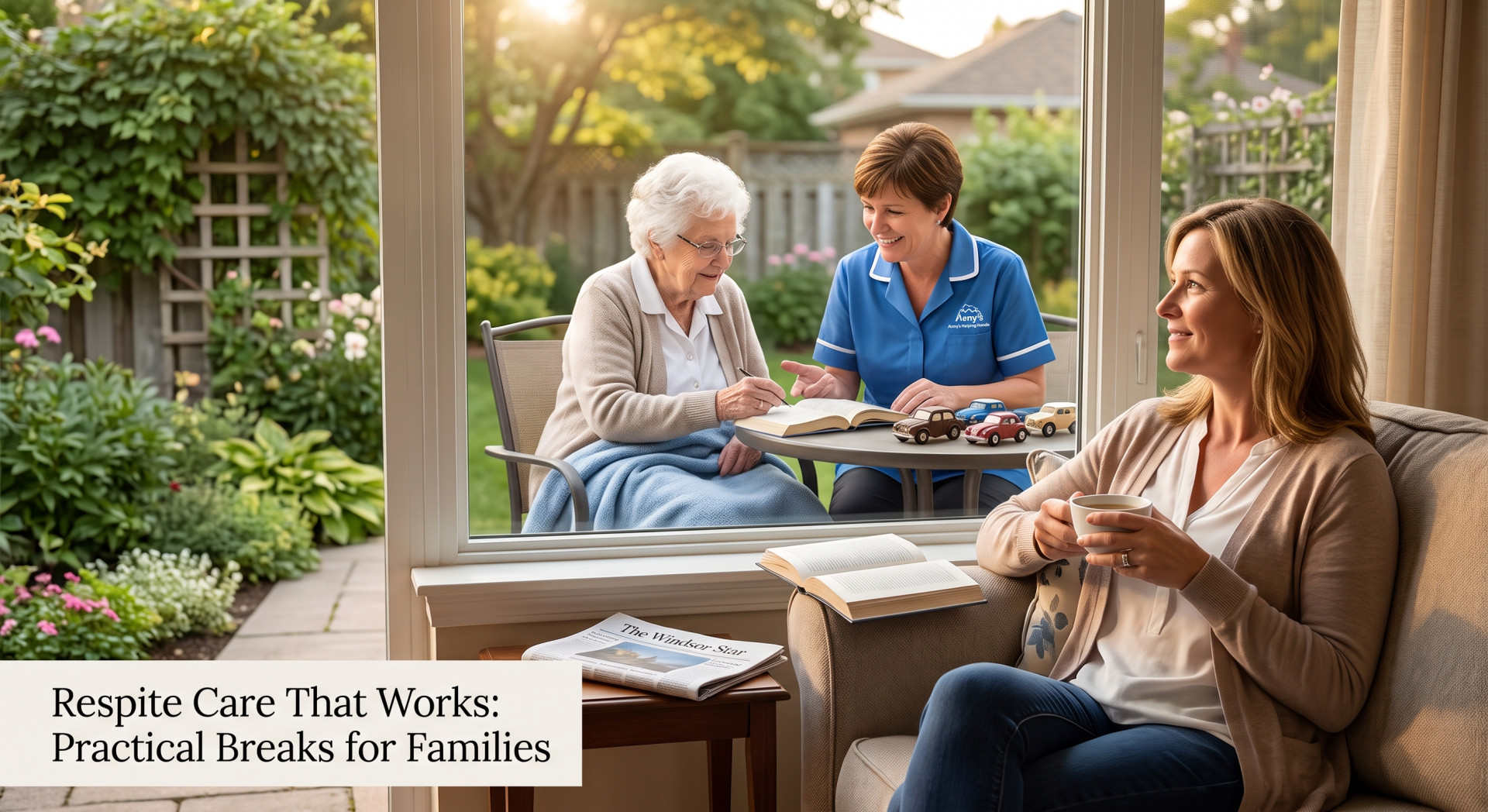
- In-home personal care, companionship, medication reminders, meal preparation, transportation, and respite for family caregivers.
- Nurse-led coordination, safety assessments, and behaviour-support strategies.
- Adult day programming to offer social engagement and caregiver respite.
- Transitional support following hospital stays to stabilize routines at home.
- Supplemental assistance in retirement or long-term care settings for one-to-one attention.
Best care is individualized. For many families, the most effective approach blends a structured daily routine, dementia-aware communication, safety modifications, and consistent, trained caregiver support at home. If you are in Windsor or Essex County, explore our in-home dementia care options and how we personalize plans at amyshelpinghands.ca/alzheimers-and-dementia-care-windsor-essex.
How Amy’s Helping Hands can help this spring
We create personalized routine plans that fit your home and your loved one’s stage of dementia. Our caregivers receive dementia-awareness training as part of onboarding, and our nurse case managers guide care plans, monitor changes, and coach families on strategies like the 6 R’s, reminiscence and sensory engagement, improv-style prompts, and wandering prevention. If you need additional structure during the day, our team can integrate adult day programming with in-home visits. Learn about our adult day care coordination and local options at amyshelpinghands.ca/adult-day-program-for-seniors-windsor-essex.
For families preparing for upcoming appointments or transitions, our team can coordinate transportation, accompany to visits, and keep routines steady. If a hospital stay occurs, we also support hospital-to-home transitions. Read more about transitional care services at amyshelpinghands.ca/in-hospital-and-going-home-from-hospital-senior-care-windsor-essex.
Quick FAQ
- What services are available for dementia patients?
In-home companionship and personal care, medication reminders, meal preparation, transportation, respite, adult day programming, nurse oversight, safety assessments, and support after hospital stays.
- What is the best care for dementia patients?
There is no single best option. The most effective care is individualized and usually combines a consistent daily routine, calm communication, environmental safety, meaningful engagement, and trained caregiver support.
- How can I reduce wandering at home?
Provide regular movement and hydration, keep exits secured with chimes, use visual deterrents at doors, reduce overstimulation, and redirect to a purposeful task or familiar item when restlessness appears.
- What helps with sundowning?
Lower lights, close blinds before dusk, reduce noise, serve a light snack, play soothing music, and follow a predictable wind-down routine.
Summary and next step
A calm, consistent routine does not eliminate the challenges of dementia, but it often reduces distress and creates space for meaningful moments. This spring, anchor each day with steady wake and sleep times, simple cues for meals and medications, gentle communication, and short activities that reflect who your loved one is.
If you would like help building a personalized routine plan, book a complimentary in-home assessment with Amy’s Helping Hands. Our team will review safety, engagement, and scheduling needs, then recommend care that supports dignity at home. Call (519) 915-4370, email care@amyshelpinghands.ca, or visit amyshelpinghands.ca to get started.