Caring for an aging parent can feel like juggling a dozen priorities at once. You want your loved one to stay safe, comfortable, and engaged, and you want the reassurance that you are doing the right thing. If dementia or changing health needs are part of the picture, the stakes feel even higher. The good news is that personalized home care can help you maintain your loved one’s independence while giving your family practical support and real peace of mind.
In Windsor and across Essex County, Amy’s Helping Hands provides dependable, client-centred care tailored to each person’s abilities, routines, and preferences. Here is how home care works, what services are available for dementia, and practical ways to cope when you are caring for an elderly parent.
What services are available for dementia care at home?
Dementia is unique for every person. The right support adapts as needs change and is grounded in compassion, patience, and consistency. Common in-home dementia services include:
- Personal care and safety: Gentle help with bathing, dressing, grooming, toileting, and mobility. Caregivers also monitor for fall risks, wandering, and changes in behaviour.
- Medication support: Reminders, adherence checks, and monitoring for side effects that may affect cognition or mood.
- Structured daily routines: Consistent schedules reduce anxiety and confusion. Care plans include meals, rest, meaningful activities, and safe exercise.
- Cognitive engagement: Reminiscence activities, music, familiar hobbies, and conversation that draw on long-term memories and strengths.
- Behaviour support: Trained caregivers use strategies like the 6 R’s to respond to agitation, confusion, or mistaken identity with calm and reassurance.
- Nutrition and hydration: Meal planning, grocery shopping, and preparation that match dietary needs and preferences, with extra attention to appetite changes common with dementia.
- Companionship and social connection: Friendly visits, transportation to appointments or community programs, and gentle encouragement to stay engaged.
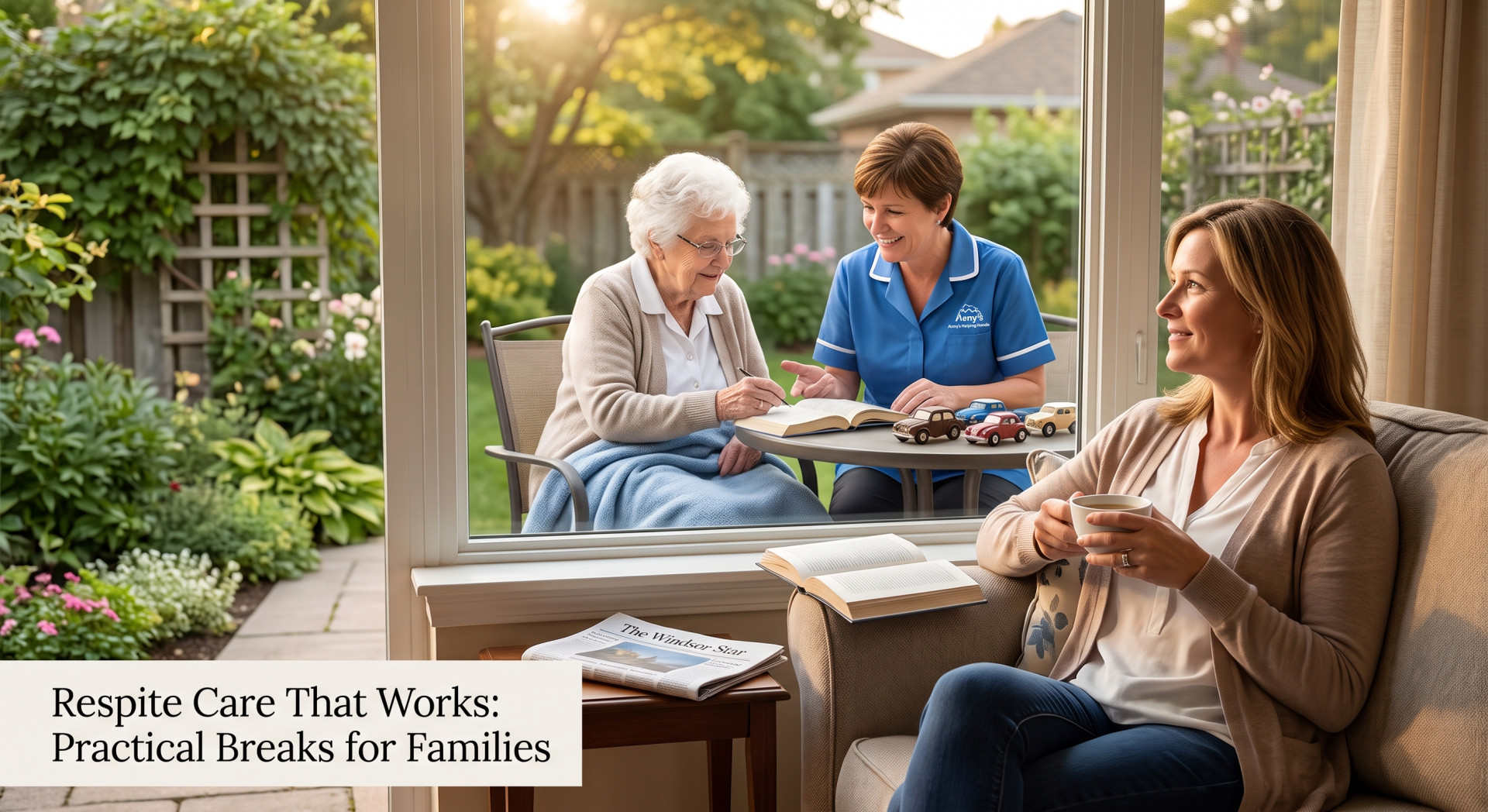
- Respite for families: Scheduled breaks so you can rest, work, or spend time with other loved ones, knowing your parent is safe and supported.
- Overnight or 24-hour care: Continuous support for those who may wake at night, wander, or need frequent help.
At Amy’s Helping Hands, dementia care is personalized after a free in-home assessment. Caregivers are matched for skill and personality fit, and every plan is supervised by experienced nurse care managers.
If you want a deeper look at specialized memory care options, explore care services for dementia for families in Windsor and Essex County.
What care options exist for people with dementia?
Care is not one size fits all. You can combine options as needs change:
- Short visits at home: A few hours per week for companionship, personal care, safety checks, and errands.
- Daily support: Regular visits for meals, medication reminders, bathing, and household tasks.
- Overnight care: Help during the night to reduce fall risks and caregiver fatigue. 24-hour home care: Around-the-clock support when safety or complex care needs require it.
- Post-hospital or transitional care: Extra help after surgery, illness, or a hospital stay to regain strength and reduce readmissions.
- Respite care: Planned breaks that protect your health and relationships while maintaining consistent care for your loved one.
- Supplemental care in facilities: Extra one-to-one support in a retirement or long-term care setting to maintain routines and reduce anxiety.
If you are in Windsor or nearby communities, learn how in home care windsor supports independence at home with flexible scheduling and dementia-trained caregivers.
How to cope with caring for an elderly parent
Caring for a parent is meaningful and demanding. These practical steps can help you cope and sustain your well-being:
- Create a simple routine: Consistency supports memory and reduces distress. Build in favourite activities and rest.
- Focus on safety basics: Clear walkways, good lighting, grab bars, and regular medication reviews. Ask about monitoring tools and medical alarms for added security.
- Communicate with empathy: Use short sentences, a calm tone, and validation. Avoid arguing facts; meet the emotion first.
- Share the load: Ask siblings, friends, or neighbours for specific tasks like groceries or rides. It is okay to be direct about what you need.
- Use respite early: Do not wait for burnout. A weekly break can reset your energy and patience.
- Keep a health notebook: Track medications, symptoms, appointments, and questions. This becomes invaluable during medical visits or transitions.
- Watch your own health: Schedule your appointments, move your body, eat well, and sleep. Caregivers who care for themselves can sustain care longer.
- Plan for changes: Talk as a family about future needs, from overnight help to 24-hour care. Early planning reduces stress when needs shift quickly.
- Seek community: Join a caregiver support group or speak with a care manager. Sharing ideas and encouragement makes a difference.
For step-by-step strategies on balancing solo caregiving at home, see how to care for elderly parents at home for practical tips you can use today.
Amy’s Helping Hands: Our approach to compassionate, dependable care
When you invite a caregiver into your home, trust is everything. As a family-owned agency serving Windsor and Essex County, we take that trust seriously.
- Personalized care plans: We start with a free in-home assessment to understand abilities, preferences, and goals. Plans can include personal care, dementia support, mobility assistance, meal prep, medication management, and transportation.
- Skilled, supervised caregivers: Our caregivers are thoroughly screened, trained in dementia and specialized conditions, and supported by nurse care managers who provide ongoing oversight.
- Flexible scheduling: Day, evening, overnight, and 24-hour options adjust as needs change. We also provide urgent home care when unexpected situations arise.
- Dignity and connection: We prioritize safety and independence while building warm, respectful relationships that make each day feel more manageable and more meaningful.
- Clear communication: Families receive timely updates and responsive support from our office team.
If your loved one is transitioning home after a hospital stay, our transitional care services can help with confidence building, mobility support, and medication management to reduce readmissions and support a smooth recovery.
Getting started in Windsor and Essex County
Every family and every senior is unique. A conversation can help you understand what support might fit best right now. Whether you need a few hours a week or continuous care, we will tailor a plan that respects your loved one’s independence and your family’s routine.
- Call us at (519) 915-4370
- Email care@amyshelpinghands.ca
- Visit our website to request a free in-home assessment
We serve Windsor, Tecumseh, Lakeshore, LaSalle, Leamington, Kingsville, Amherstburg, Essex, and surrounding communities.