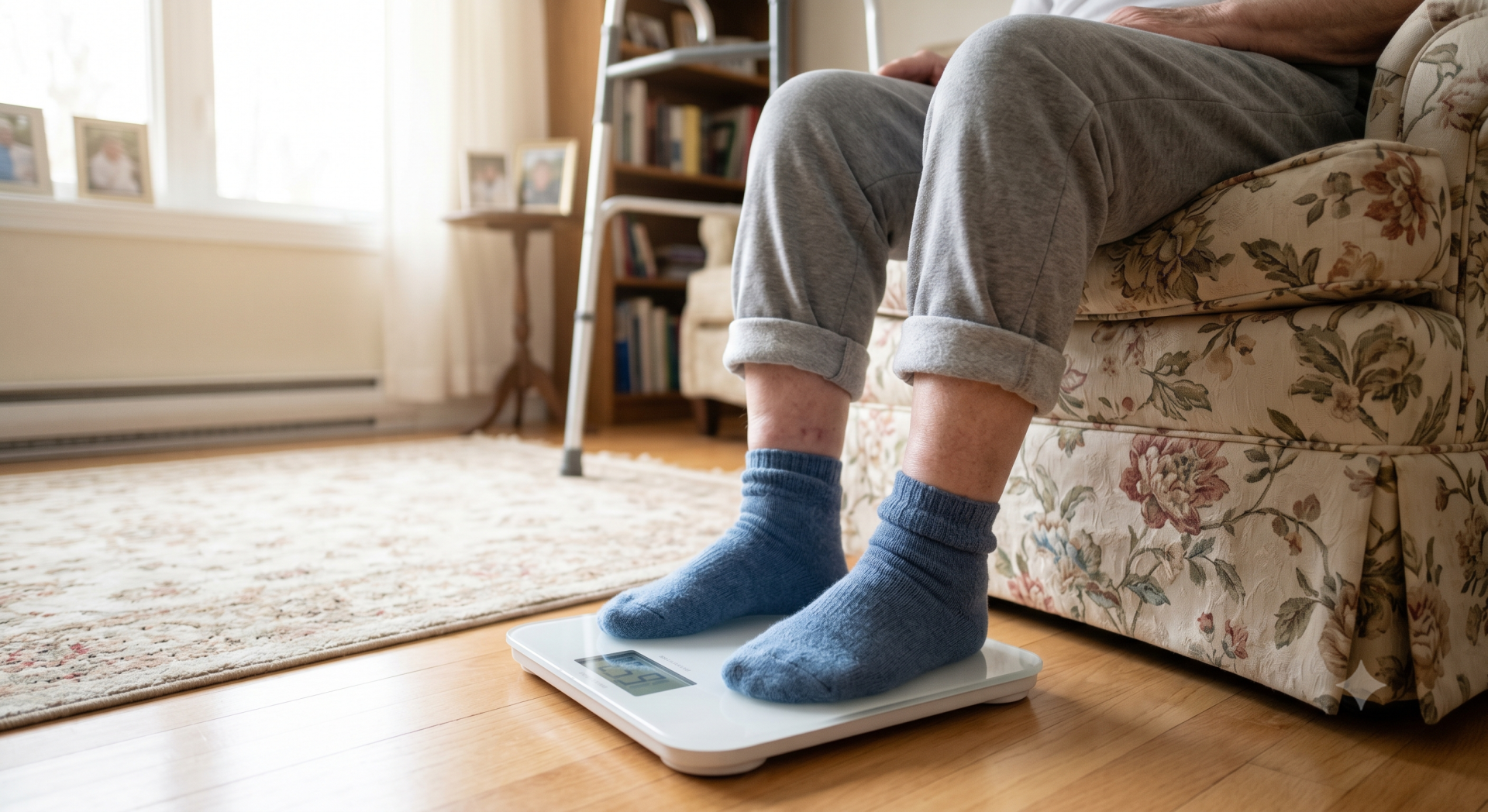
When a loved one is diagnosed with Congestive Heart Failure (CHF), the sheer volume of medical information can feel overwhelming. Among the medications, dietary changes, and appointments, there is one daily routine that stands above the rest in keeping your loved one out of the hospital: monitoring fluid retention.
At Amy’s Helping Hands, we work with countless families in Windsor-Essex managing CHF at home. We want to demystify why fluid retention happens and share the most effective, simple way to monitor it.
Why Does CHF Cause Fluid Retention?
"Heart failure" does not mean the heart has stopped working; it means the heart muscle is not pumping blood as strongly as it should. Because the pump is weak, blood can back up in the veins. This pressure forces excess fluid out of the blood vessels and into the surrounding tissues.
Depending on the side of the heart affected, this fluid usually pools in the lower extremities (feet, ankles, and legs) or backs up into the lungs, making it incredibly difficult to breathe.
The "Gold Standard" of Monitoring: Daily Weights
Many families assume that checking blood pressure is the best way to monitor CHF at home. While blood pressure is important, tracking daily weight is actually the most accurate early warning system for a CHF flare-up. Sudden weight gain in a senior with CHF is almost never a gain in fat or muscle—it is a gain in water. Retaining just one extra gallon of water can add over 8 pounds to the scale, severely straining the heart.
How to get an accurate daily weight: To ensure you aren't just measuring the weight of a heavy sweater or a big breakfast, you must establish a strict routine:
Same Time: Weigh them first thing in the morning, immediately after they use the washroom but before they eat breakfast or drink anything.
Same Scale: Always use the same scale, kept on a hard, flat surface (never on carpet).
Same Clothing: Ensure they are wearing a similar weight of clothing each day, or a standard bathrobe.
Write it Down: Keep a logbook right next to the scale. Do not rely on memory.
The "Red Flag" Rule: When to Call the Doctor
Every cardiology team will have specific guidelines for your loved one, but the general medical rule of thumb for CHF is:
If you see these numbers, do not wait for their next scheduled appointment. Call their doctor or clinic immediately. Often, the doctor can simply adjust their diuretic medication (water pill) over the phone, resolving the issue at home and entirely avoiding an emergency room visit.
Other Silent Signs of Fluid Buildup
Weight is the best metric, but you should also keep a close eye out for these physical symptoms:
Sock Indentations: If taking off their socks leaves a deep, lingering indent in their skin, they are experiencing edema (swelling).
Shortness of Breath: Especially if it happens while they are resting or lying flat in bed. (Do they suddenly need to sleep propped up on three pillows?)
A Persistent "Wet" Cough: This can indicate fluid backing up into the lungs.
Tight Rings or Shoes: Sudden difficulty putting on their normal footwear.
You Don't Have to Manage It Alone
Managing CHF requires intense daily vigilance, which can quickly lead to caregiver burnout for family members.
If you are struggling to maintain this daily routine, Amy’s Helping Hands can help. Our specialized caregivers and Nurse Case Managers can ensure daily weights are logged, low-sodium meals are prepared, and subtle physical changes are reported immediately.
If you need support managing a CHF diagnosis at home, call our Windsor-Essex office today at 519-915-4370. We are here to help.