Few physical sensations are as terrifying as feeling like you cannot get enough air into your lungs. For seniors living with heart disease or Congestive Heart Failure, breathlessness (dyspnea) is a recurring symptom.
What makes shortness of breath so challenging is the physiological loop it creates: breathlessness triggers fear and panic; panic spikes adrenaline; adrenaline speeds up the heart rate; and a faster heart rate makes breathing even harder.
Breaking this fear-breathlessness cycle requires a calm, structured response from family caregivers.
Immediate Physical Postures to Ease Breathing
When shortness of breath strikes, positioning is everything. Never allow a breathless senior to lie flat on their back. Use these recovery positions to open their chest cavity:
- The Tripod Position (Seated): Have your parent sit upright in a sturdy chair, lean slightly forward from the waist, and rest their elbows on a table or on their knees. Leaning forward fixes the shoulder girdle, allowing the neck and chest muscles to assist the diaphragm in pulling air in.
- The High-Fowler’s Position (In Bed): If breathlessness occurs in bed, raise the head of the bed or stack pillows so their torso is angled upright at 45 to 90 degrees. Bend their knees slightly over a pillow to prevent them from sliding down.
Respiratory and Psychological Grounding Techniques
Once your parent is positioned correctly, guide them through these calming steps:
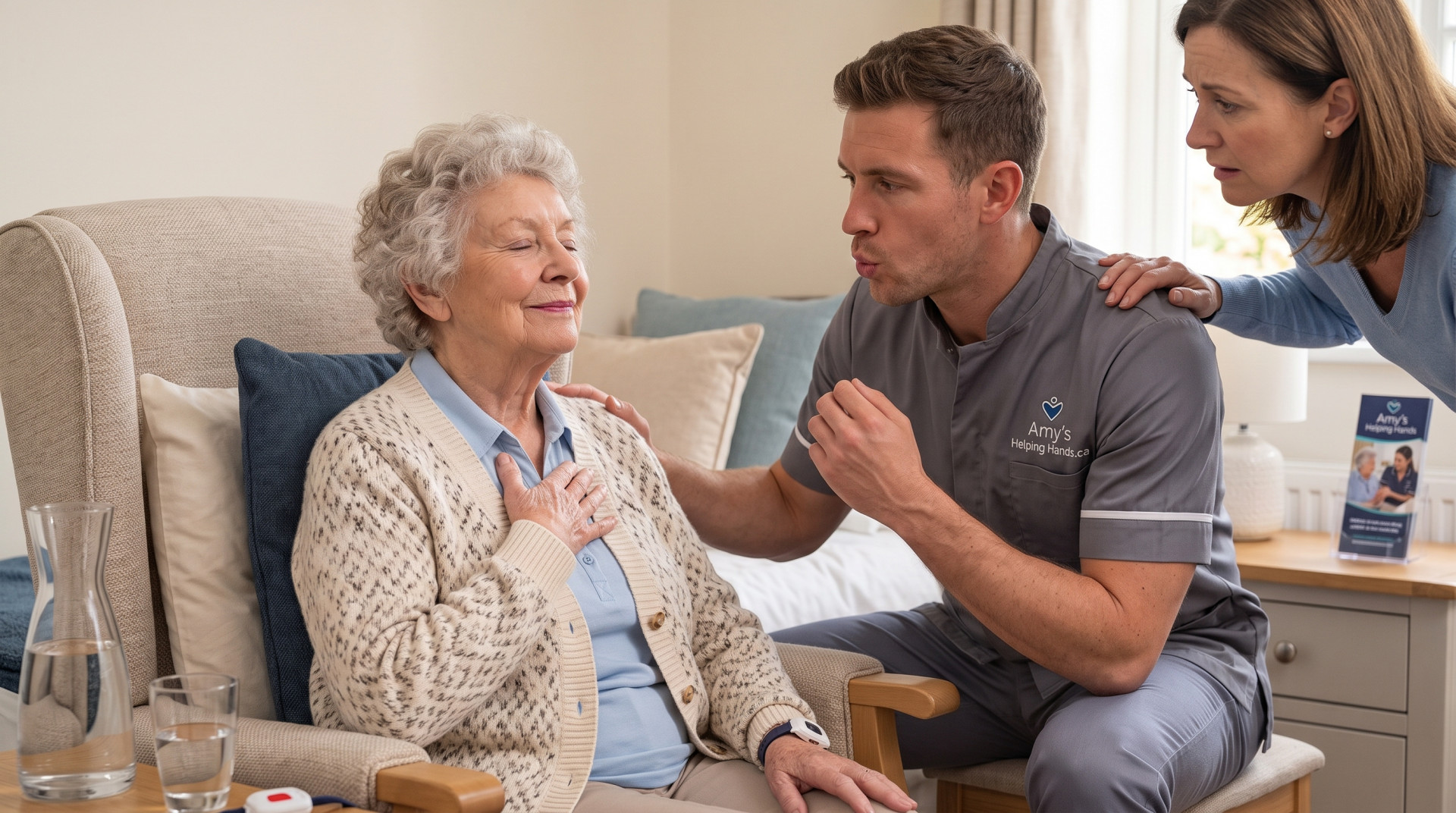
- Pursed-Lip Breathing: Inhale slowly through the nose for a count of 2. Pucker the lips (as if preparing to whistle or blow out a candle) and exhale slowly and gently through the mouth for a count of 4. This creates back-pressure in the airways, keeping them open longer to release trapped air.
- Cool Air Stimulation: Direct a small, handheld battery-operated fan toward your parent's face, specifically targeting the area around their nose and cheeks. Studies show that cool air stimulating the trigeminal nerve in the face tricks the brain into sensing increased airflow, rapidly lowering panic.
- Use a Calm, Low Tone: Speak slowly, softly, and in short sentences. Say: "You are safe. I am right here with you. Let's take a slow breath together."
When to Seek Emergency Medical Attention
While mild breathlessness during exertion is common with CHF, seek immediate emergency help (call 911) if you observe:
- Confusion, severe disorientation, or extreme drowsiness.
- Bluish or gray discoloration around the lips, tongue, or fingernails (cyanosis).
- Inability to speak more than one word at a time due to gasping.
- Chest pain, pressure, or tightness accompanying the breathlessness.
We Are Available When You Are Ready
Living with the constant threat of breathlessness creates immense anxiety for seniors and their family caregivers. Having a trained, calm professional nearby provides an essential safety net.
At Amy’s Helping Hands, our caregivers offer a reassuring, watchful presence to help your parent maintain steady routines and manage daily fatigue safely.
Whenever you are ready to discuss home support across Windsor-Essex, submit a Start Care Now inquiry, or speak directly with our team at 519-915-4370 during our office hours (Monday – Friday, 9:00 AM – 5:00 PM).