Sorting out how home care is funded in Ontario can feel confusing, especially when you are trying to keep a loved one safe and comfortable at home. If you are in Windsor-Essex and looking ahead to summer routines, respite, or a recent change in health, this guide explains what is publicly funded, what is private-pay, and how to blend supports without losing track of schedules or safety.
You will also find practical tips on tax credits and claims, plus how we coordinate with Ontario Health at Home so you can focus on your family while we handle the moving parts.
If you need personalized guidance now, call (519) 915-4370 or email care@amyshelpinghands.ca to book your complimentary in-home assessment and receive a personalized quote.
What publicly funded home and community care includes
Ontario Health at Home (OHAH), previously known as Local Health Integration Network home care, is the provincial entry point for publicly funded home and community care. Access and hours are based on an eligibility assessment and your loved one’s assessed needs. Services typically include:
- Nursing tasks such as wound care, injections, and certain medical monitoring when indicated.
- Basic personal support for bathing, dressing, and hygiene.
- Limited rehabilitation services, such as physiotherapy or occupational therapy when eligible.
- Care coordination and referrals to community programs.
Important clarifications:
- OHAH determines hours based on need. Hours can vary typically booked in 15 minute to 1 hour visits and may change over time. Wait times can occur.
- OHAH does not pay for private home care hours from independent agencies. If you decide you want more help than the publicly funded hours provide, those additional hours are paid privately to the provider you choose.
- OHAH does not typically cover chores like housecleaning, extensive meal preparation, or long companionship visits, although brief support may be included within personal support time.
- OHAH does not provide transportation, errands or grocery shopping
How to access OHAH in Windsor-Essex:
- You can self-refer by calling Ontario Health at Home for Erie St. Clair region or by speaking with your family doctor or hospital discharge planner. If your situation is urgent, let the coordinator know so they can prioritize safety.
Private-pay home care in Windsor-Essex, at a glance
Private home care is flexible and can be tailored to fill gaps around OHAH hours. In our region, typical private-pay hourly rates often range from approximately $35 to $45 per hour. Final rates vary by service type, skill level required, visit length, and specialized needs.
What to expect when starting private services:
- Minimums: Many agencies use a two-hour minimum per visit or a weekly minimum for scheduling stability.
- Deposits: A deposit is usually required to initiate services and secure start-up scheduling.
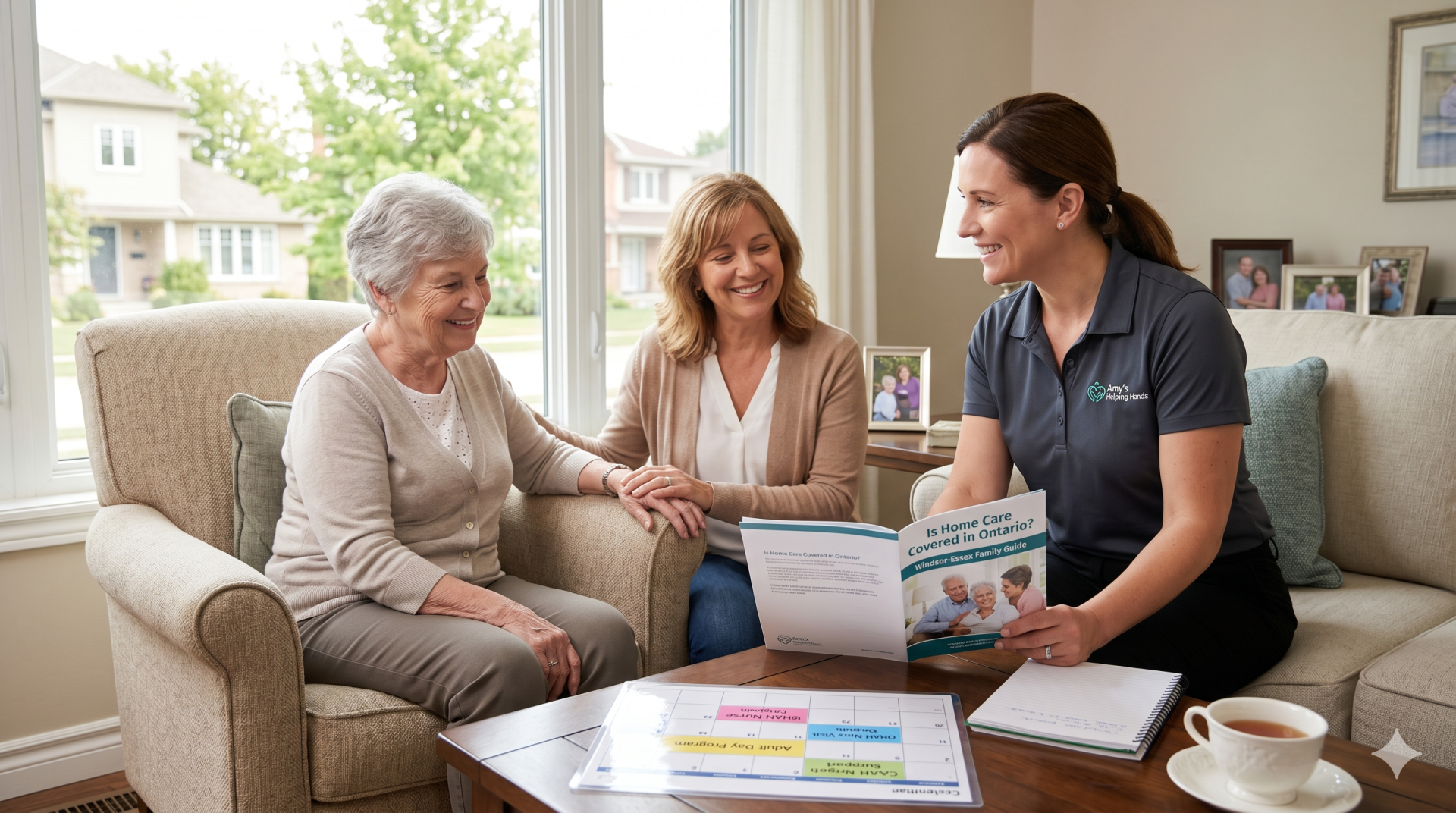
- Assessment: A complimentary in-home assessment helps clarify routines, risks, preferences, and goals. After this visit, you receive a personalized quote with final pricing, visit structure, and recommended care plan.
If you are comparing options, this guide to working with a home care agency versus a private contractor may help you decide what is right for your family. You can learn more about the differences and coordination benefits in our overview of agency vs. private caregiver models on our website.
For details about our approach to home care services in Windsor and Essex County, visit our page on home care services in Windsor and neighbouring communities to see how we build care plans that fit around your schedule and preferences.
How to blend OHAH, day programs, respite, and private care
Blending supports allows you to stretch resources while keeping routines predictable. Consider these practical combinations, especially for summer:
- Use OHAH personal support for bathing while scheduling private visits for meal preparation, hydration reminders, and companionship during higher-risk times of day.
- Add an adult day program for structured social time and caregiver respite, then book private evening support for meal routines and safe wind-down. If you want help arranging transportation or integrating program hours with in-home visits, we can coordinate that for you. Explore local adult day program information on our site to see typical activities and how we help families get started.
- After a hospital discharge, combine nurse directed private care during the first 72 hours at home with any OHAH nursing visits that are approved. This approach can reduce readmission risk by supporting medication reconciliation, safe transfers, and follow-up appointments. Learn more about safe hospital-to-home transitions and transitional care planning on our transitional care page.
Safety first:
- Prioritize fall prevention and hydration during hot weather. Align visit times with risky transitions such as morning routines, showering, and evening sundowning for those living with dementia.
- Keep one shared schedule for all services. We provide daily electronic reporting and schedule updates so everyone stays aligned.
Tax credits and medical expense claims
Families often ask what financial support exists for caregiving costs. While we cannot provide tax advice, the following are common starting points in Ontario:
- Canada Caregiver Credit (CCC): A non-refundable federal tax credit for individuals supporting a spouse or dependant with an impairment in physical or mental functions. Eligibility and amounts vary.
- Disability Tax Credit (DTC): If your loved one qualifies, other related credits or benefits may become accessible.
- Medical expense tax credit: Some in-home care expenses may be eligible as medical expenses when provided for eligible care needs. Documentation is important.
- Ontario-based caregiver programs can change year to year. Review current provincial supports or consult a tax professional for up-to-date guidance.
For a plain-language overview, see our article on caregiver tax credits and benefits in Ontario. It explains what to track, where to start, and when to seek professional advice. Because tax situations vary, a qualified tax professional can provide personalized guidance.
How Amy’s Helping Hands coordinates care
Our role is to make complex care simpler and safer to manage.
- We align with your OHAH care plan. With your consent, we match our schedules and tasks around publicly funded services and communicate directly with family and care teams as needed.
- Nurse case managers oversee care. They guide care plans, monitor changes, and provide clear directions to caregivers. When conditions shift, we adjust visits and communicate updates quickly.
- Transparent reporting. Families receive daily electronic updates, including notes on meals, hydration, medication reminders, mood, and safety observations, so you always know how the day went.
- Flexible coverage. We can add support during seasonal risks, after hospital discharge, or when respite is needed. If your parent lives in a retirement home or long-term care setting and needs extra help, we also provide in-facility supplemental support.
To get started, call (519) 915-4370 or email care@amyshelpinghands.ca to book your complimentary in-home assessment and receive a personalized quote.
Frequently asked questions
Is home care covered by OHIP?
- OHIP-covered services include publicly funded home and community care coordinated through Ontario Health at Home based on assessed need. This may provide nursing, personal support, or therapy services. However, OHIP does not pay for additional private home care hours from independent agencies. Those hours are private-pay.
How do I manage an elderly parent at home safely?
- Start with an assessment, either through OHAH or a private in-home assessment, to identify risks and priorities. Build a simple daily routine around meals, medications, bathing, and rest. Add help during risky times such as showers or night-time transfers. Consider adult day programs for structure and respite. Keep one shared calendar for all services, and ask providers for clear communication and daily updates. For step-by-step guidance, see our practical tips for caring for elderly parents at home on our website.
How do I cope with caring for an elderly parent?
- Caregiver stress is common. Schedule regular respite, ask siblings or friends for specific tasks, and consider a few private-pay hours during your highest-stress periods. Journaling, support groups, and short breaks can help you reset. If sleep is disrupted, explore overnight support or rework routines to reduce night-time strain. If you are struggling emotionally, speak with your primary care provider or a counsellor.
Key takeaways and next steps
- Publicly funded home care in Ontario is accessed through Ontario Health at Home and is based on eligibility and assessed need. It does not pay for private agency hours.
- Private-pay home care in Windsor-Essex typically ranges from about $35 to $45 per hour, often with a two-hour minimum and a deposit to initiate services. Final quotes follow a complimentary in-home assessment.
- Blending OHAH, adult day programs, respite, and private care can protect safety and preserve routines, especially over the summer.
- Some care costs may be supported through federal or provincial credits or medical expense claims. A qualified tax professional can confirm your eligibility.
If you are ready to coordinate a plan that fits your family’s needs, call (519) 915-4370 or email care@amyshelpinghands.ca to book your complimentary in-home assessment and receive a personalized quote.
Internal resources you may find helpful:
- Learn more about adult day programming and coordination in Windsor-Essex on our adult day program page.
- See how we manage safe transitions on our hospital-to-home and transitional care overview.
- Explore practical tips for solo caregivers in our guide to caring for elderly parents at home.